


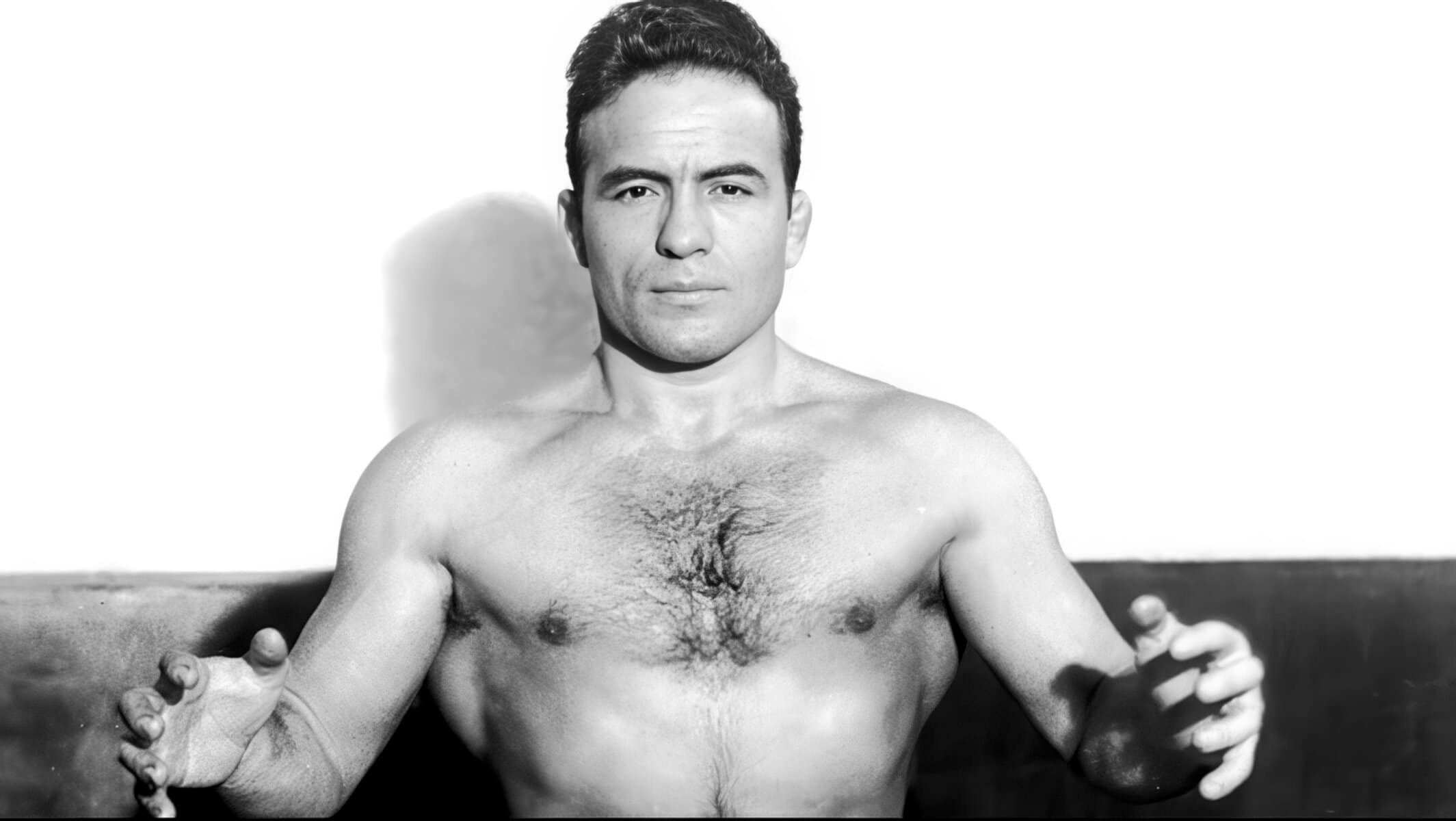
There is a certain kind of wrestling fan who knows everything.
You have met this person, or you have been this person, or you have at least sat next to this person at two in the morning on a Discord server where they explained, with great patience and zero irony, why a match from 1987 in a building that no longer exists was the most important thing that happened that year in any sport.
I am not that person.
I am adjacent to that person.
I have spent nights on websites with names I could not pronounce looking for matches that aired one time in a building in Japan. I have opened spreadsheets at midnight that made perfect sense at the time and less sense in the morning. I have given this strange and beautiful fake sport more of myself than I would ever admit out loud at a dinner party. At least dinner parties with decent folks.
So when the wrestling people started arguing about something called GWE — Greatest Wrestler Ever, a project where serious people rank their top 100 wrestlers of all time, which is either the most obsessive thing in sports or the most beautiful depending on how you look at it — I felt the particular shame of someone who thought they were paying attention.
I assumed it was some Japanese promotion I had never heard of.
I was already headed to Dailymotion before I finished reading the sentence.
It was not a Japanese promotion.
But it did lead me to Jim Londos.
And Jim Londos is the whole reason I am writing this.
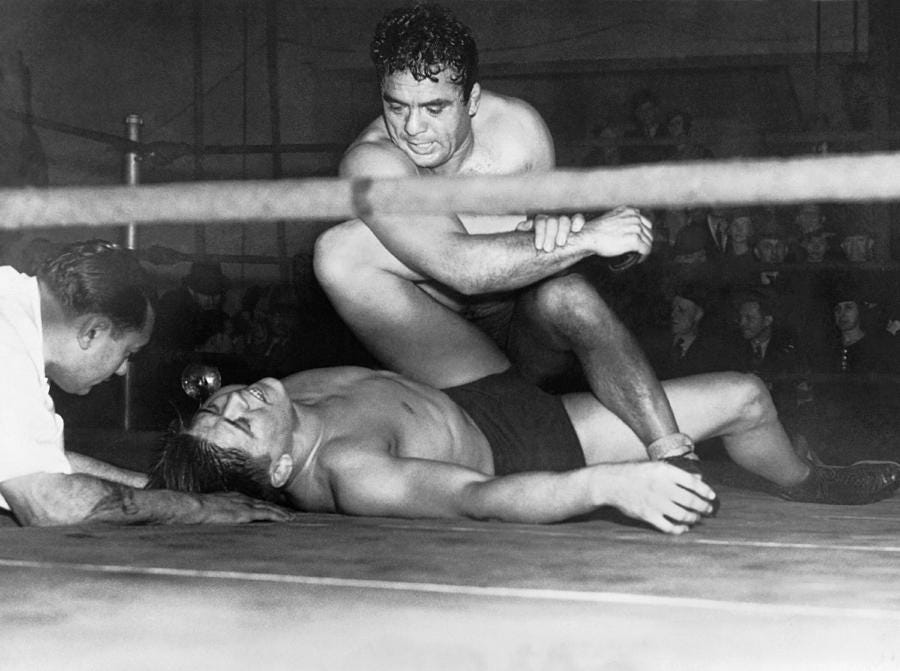
Everything I know about him comes from Dave Meltzer and Wikipedia.
Which is not how you want to meet a person like this. But it will at least get you introduced.
He was born in a small town in Greece in 1894, the youngest of thirteen children, which feels like enough information on its own to explain a few things about a person. He came to America at fifteen with a cousin and not much of a plan beyond figuring it out as he went. He worked carnivals for a while. If you have ever been to one, you know the feel of it. Lights a little too bright. Music coming from somewhere you can’t quite place. The smell of something fried that you will probably regret later. Everybody moving toward something they are not entirely sure about.
Somewhere in the middle of all that, he found wrestling.
And from the beginning he was told no. Too small. Too foreign. Not the right shape for the thing he wanted. The people who ran things looked at this kid from Argos, Greece and told him, politely or not, that he was not what they were looking for.
He did it anyway.
And then he became the biggest draw the sport has ever seen.
Not one of the biggest. The biggest.
There are people who have gone back and done the math. Real math. Adjusted for inflation and for what a ticket cost against what a working man made in a week. And what the math says is this: Jim Londos outdrew Hogan. Outdrew Austin. Outdrew Bruno Sammartino and The Rock and every name that gets said like scripture in serious wrestling conversations.
Not one of them.
All of them.
The whole argument — every name you have ever typed in all caps somewhere — settled by a man most of those places have never mentioned.
He wrestled in Athens in front of 100,000 people, with thousands more outside who couldn’t get in. Richard Nixon honored him. The King of Greece honored him. When he left a territory it didn’t dip for a while and recover. It folded up behind him like something that had been held together entirely by his presence and nothing else.
For thirty years he walked into buildings and made people forget their lives for a little while.
And these were not easy lives he was asking people to forget. This was the Depression. People didn’t have money. Not really. They had enough to get by, most of them, and not much beyond that. And still they found a way to spend a little of what little they had to watch this man from Argos, Greece, who was too small and too foreign and turned out to be exactly what they needed.
I keep coming back to that.
What do you have to be for a person who is worried about everything to decide, even for one night, that you are worth it?
He was that.
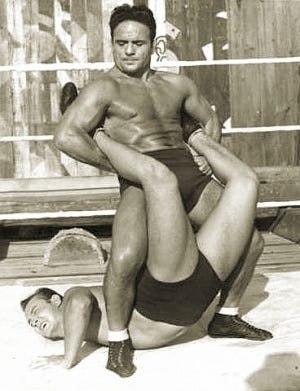
And then one night the crowd cheered his name for the last time.
I think about that more than anything else in this story.
Maybe he knew. Maybe he stood there in the lights just a second longer than usual and let the sound come all the way in. Not dramatically. Not like a movie. Just long enough to notice it.
Or maybe he didn’t know at all. Maybe it was just another night. Another building. Another town. Another drive back to wherever he was staying. And only later, in the quiet, when things got quieter than he expected, did it occur to him that something had ended and wasn’t coming back.
I don’t know which one it was.
I like to think he knew.
I like to think he stood there and took it in and then made his peace with leaving it there.
Because either way, the ending was the same.
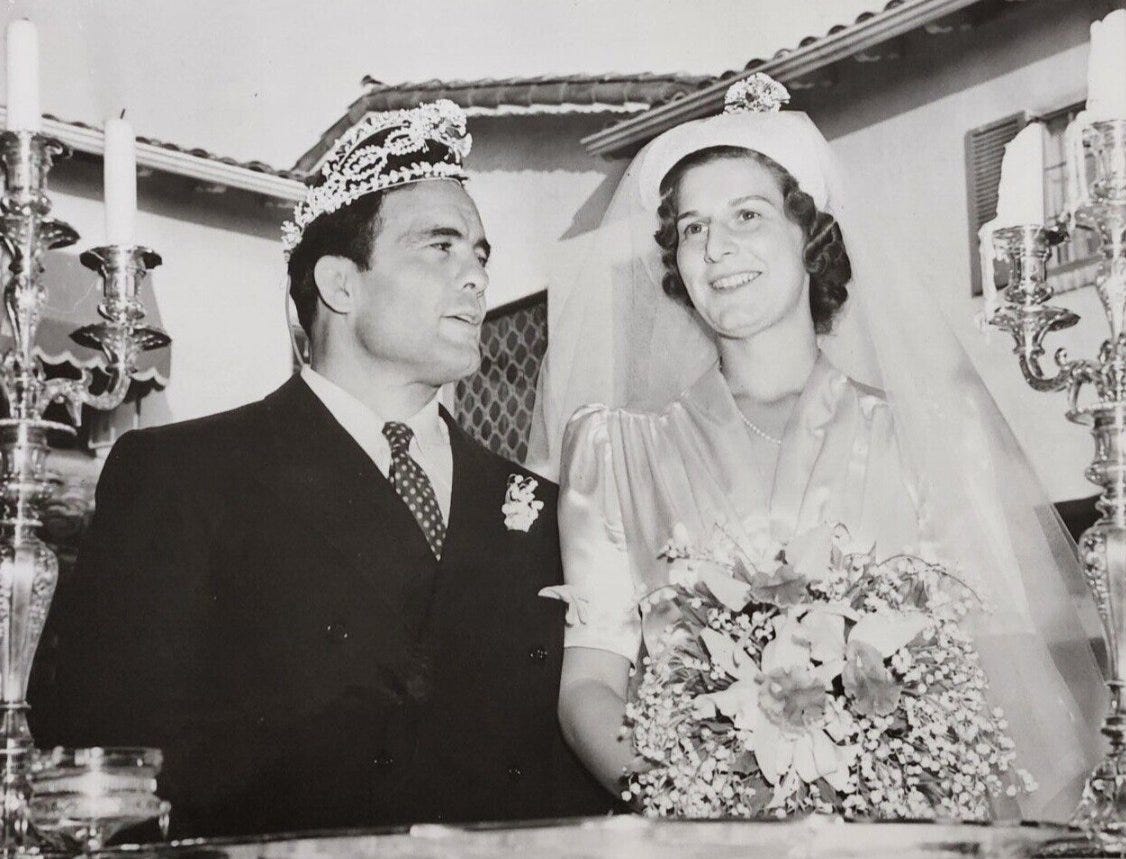
He married a woman from Missouri who the papers called a “St. Louis Aviatrix,” which is honestly one of the best descriptions of a human being I have ever come across.
They had three daughters. Diana. Demetra. Christina.
They settled in Escondido, California, on ten acres of avocado grove, which feels either like the most peaceful ending to a life like his or exactly the right one.
I looked up what it takes to grow avocados, because I do not know how to grow anything and it felt like I owed him that much. It turns out they require patience. You cannot rush an avocado tree. You water it. You tend to it. You show up for it on the days when nothing visible is happening. And if you have done what you were supposed to do, eventually, in its own time, it gives you something back.
That is a different kind of crowd.
He spent his days there. Walking the rows. Paying attention to things that do not cheer for you. Watching the light move across a grove that did not care who he used to be. Building something that asked only that he show up and do the work and not be in a hurry about it.
After a life that was loud in a way most of us will never really understand, he chose something quiet.
Or maybe quiet chose him. Maybe that’s how it always goes.
He died on August 19, 1975, of a heart attack, and is buried in Escondido under a headstone that most wrestling fans have never gone looking for. The man who drew 100,000 people in Greece, forgotten so completely that I made it this far into a wrestling obsession without ever once hearing his name.
That is how little the noise protects you from being forgotten.
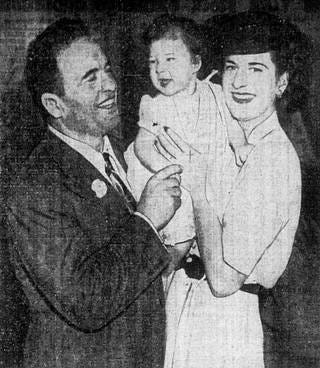
I have managed bands you have never heard of. I have preached sermons to rooms that were, let’s say, intimate. I have won journalism awards for stories that probably ended up lining birdcages in southern West Virginia, which is either a humbling thing or a perfect thing depending on the day you ask me.
I have spent a lot of my life tending things that didn’t come with much of a crowd.
And then my wife and I adopted our daughter.
Our house looks different now. There are bottles in places that used to hold other things. There are blankets that do not stay folded, and I have stopped trying to fold them. There is a rhythm to the days that I did not choose and cannot negotiate with, and I am slowly, genuinely learning that this is one of the better things that has ever happened to me.
When she first came home I loved her the way you love something you have chosen and waited for and built a life toward. Completely, without reservation, from the first moment. But it was still, in some way I could not have explained to you then, a love that was mostly going one direction.
And then one morning she looked up at me and smiled.
We were not doing anything worth noting. Just sitting there in the kind of early morning when the rest of the world has not started yet. The kind of moment that wouldn’t make it into any highlight reel.
But it wasn’t nothing.
It was recognition.
Something shifted behind her eyes and I understood, in the way you understand things that show up without warning, that I had been placed somewhere inside her world. That I was now a known thing to her. That she had looked out at everything and found me in it and filed me somewhere safe.
None of the bands I managed, the sermons I preached, or the stories I wrote prepared me for that moment.
It was the loudest thing I have ever felt.
And the room was completely quiet.
Jim Londos drew 100,000 people in Greece, then went home to his wife, his daughters, and an avocado grove.
I think he knew what he was doing.
It just took me a while to understand it.