


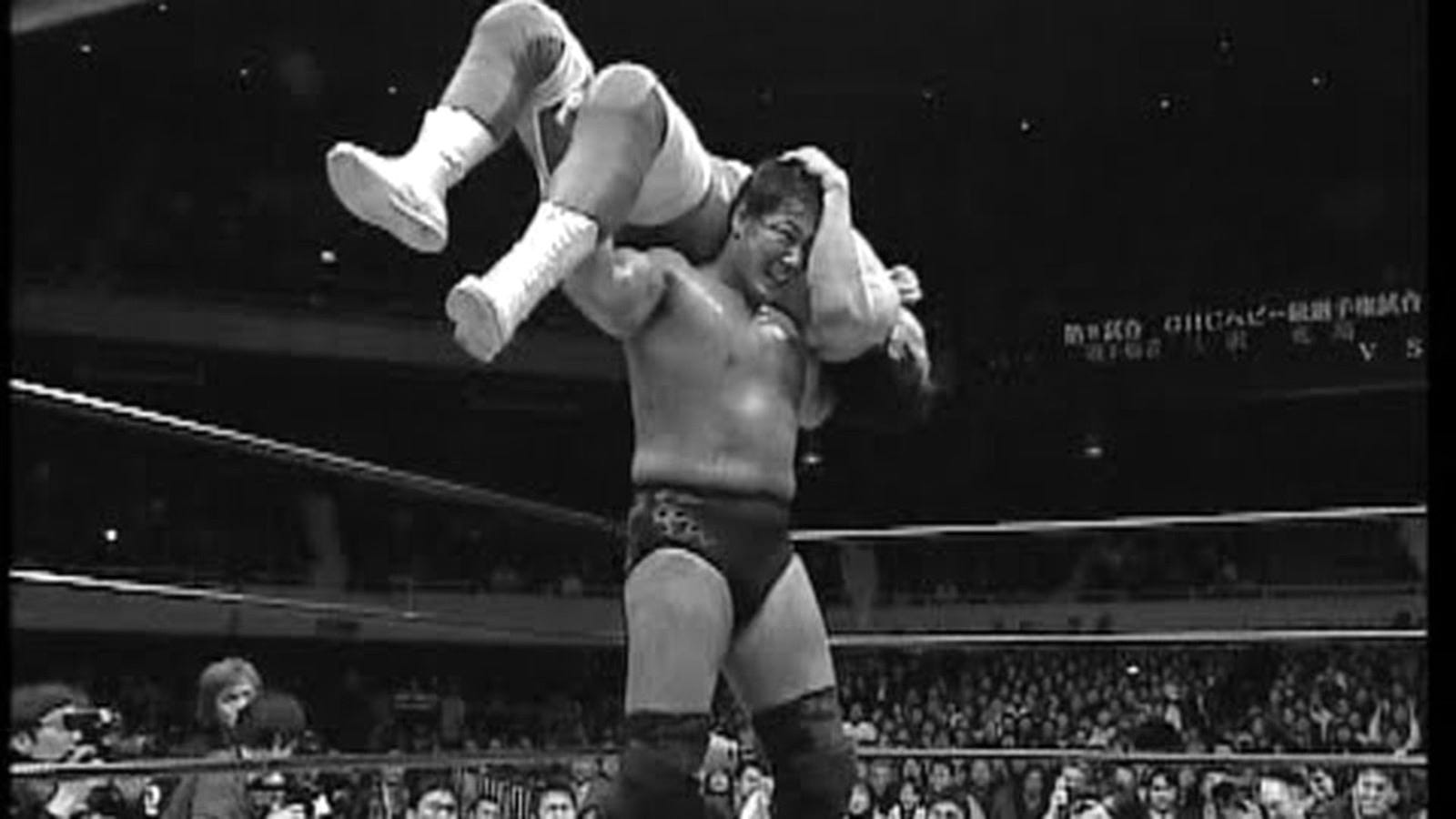
I have a confession.
I’ve never seen The Godfather.
Not Part I. Not Part II. Not even the one people argue about like it’s a mid-card sequel that didn’t need to happen. I have somehow navigated 40 years of life without sitting down for what many consider the Ric Flair–Ricky Steamboat trilogy of American cinema.
And it gets worse.
I’ve never seen an episode of Game of Thrones. Not one dragon.
I’ve never watched The Sopranos.
I’ve never finished Breaking Bad.
I understand what this does to some of you. Somewhere, a film bro with a Letterboxd account just set down his pour-over coffee in disappointment. This is the equivalent of telling a wrestling purist you’ve never watched Mitsuharu Misawa vs. Kenta Kobashi (more on that later.)
It’s heresy. It’s cultural malpractice. It’s like admitting you don’t know where you were when Hogan turned heel.
But you know what I have seen?
Every Mighty Ducks movie. Multiple times. Including D3, which is basically the late era Jimmy Hart booked WCW Saturday Night of cinema—deeply flawed, oddly charming, and absolutely not something that mattered in the larger canon.
I’ve watched NCIS: Hawaii. On purpose. I remember the plotlines.
And at some point in the 1990s, I consumed episodes of Thunder Alley, a sitcom starring Haley Joel Osment and Ed Asner, because apparently I had both cable and absolutely zero parental supervision.
Fandom is funny like that.
We all think we’re going to be completionists. We think we’re going to “do it right.” Watch the classics. Study the canon. Stay current. Be informed. Have takes that are both historically grounded and culturally relevant.
And then real life shows up.
You cannot follow the entire Marvel Cinematic Universe, keep up with every Disney+ spinoff, read the current Fantastic Four run, track what’s happening in the Ultimate Universe, and still be a functioning adult with a mortgage and a grocery bill.
Trust me. I’ve tried.
At some point you just want a new issue of Dr. Strange. Or Tiger Division.
(And yes, I’m going to say it again: Greg Pak, Marvel editorial, whoever has the keys to the kingdom — I am begging you. What’s next for Taegukgi? Is White Fox ever going to catch a break? Can Luna Snow just have one uncomplicated win? What is General Nguyen plotting? I check for updates like a Midwestern dad checking the weather radar before mowing. I’m not asking for much. Just closure. Or at least Issue #6.)
You end up clinging to the things that feel like yours.
And that’s where the blind spots form.
Wrestling is the same way.
There are matches I haven’t seen that would make certain corners of the internet revoke my fan card. I haven’t done a full All Japan deep dive. My 90s Joshi knowledge is more “I’ve seen the clips” than “I wrote a dissertation.” My puro consumption is curated and chaotic.
It’s not that I don’t want to watch everything.
It’s that there’s too much everything.
Isn’t it strange that I’ve only seen a little bit of the 1994 Super J-Cup, but I could give you a borderline oral history of the Jesse Ventura arm wrestling challenge from WCW Saturday Night in 1992?
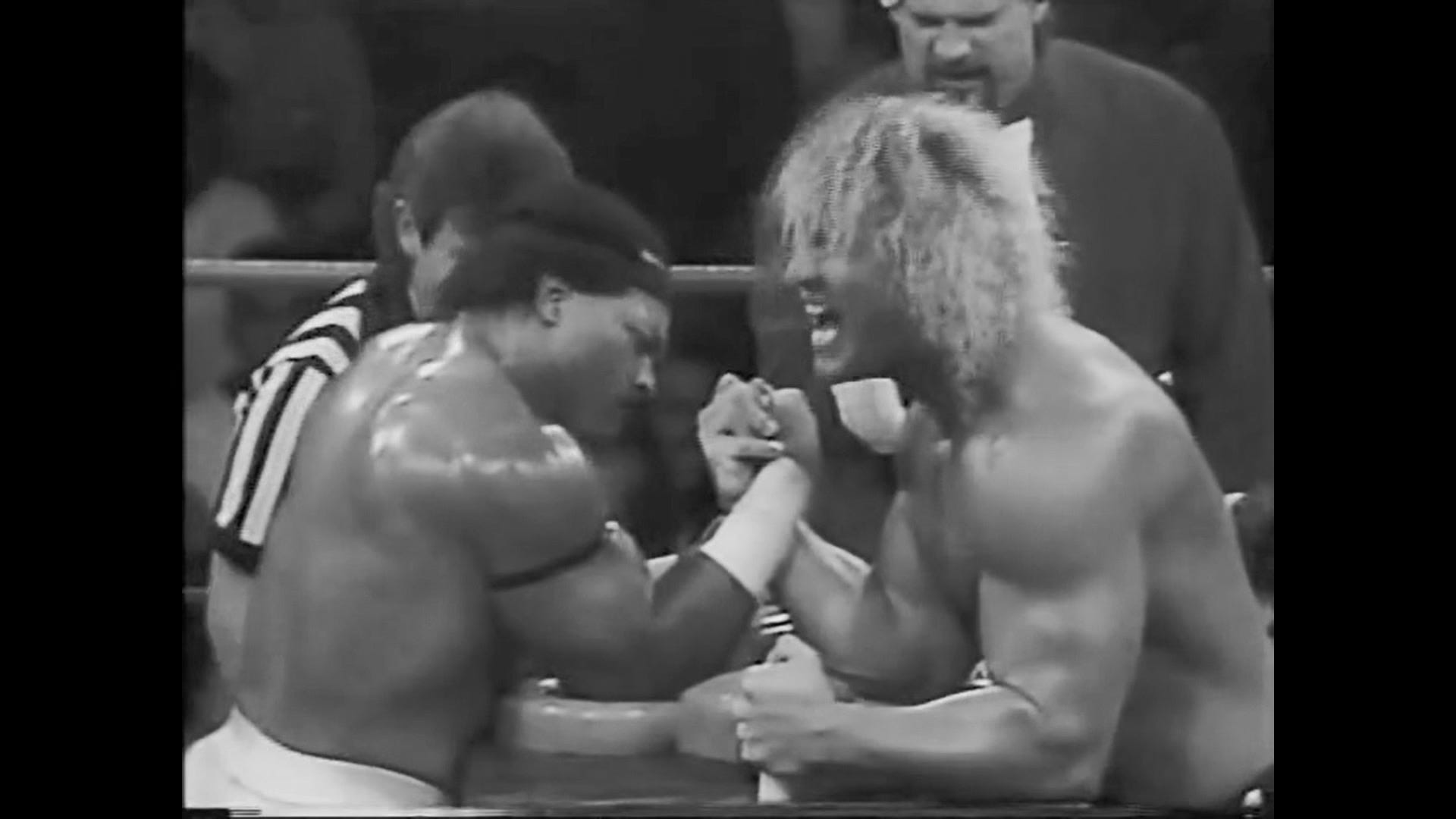
I can tell you about the buildup, the faux-sport presentation, the announcers treating it like it was the Munich Olympics of forearm strength. I can tell you where it fits in that weird transitional WCW timeline between corporate seriousness and neon chaos, when everything felt one executive decision away from either brilliance or disaster.
But Misawa — the Emerald Ace, the architect of an entire wrestling style — I respect him more than I’ve truly experienced him.
So I tried to fix that.
I sat down and watched Misawa vs. Kobashi from NOAH in 2003. The one. The capital-C Classic. The match that shows up on every “If you want to understand wrestling” list.
And it was great.
You can feel the weight of it. The pacing. The escalation. The way every strike lands like it matters. The crowd reacting like they’re witnessing scripture.
I get it.
I truly do.
And yet.
It didn’t hit me in my chest the way I thought it would.
I admired it. I respected it. I appreciated the craftsmanship.
But it didn’t rearrange my emotional furniture.
Meanwhile, I can watch a random CMLL trios match at 1 a.m. and feel like I’ve just discovered religion. Or throw on a random Bret Hart TV match from 1993 and feel ten years old again. Or revisit some absurd WCW angle that makes no objective sense but makes perfect emotional sense to me. (I’m looking at you, DDP Mystery Benefactor.)
That’s the blind spot.
It’s not ignorance.
It’s gravity.
We orbit what pulls us.
Which brings me back to The Godfather.
I’m sure it’s brilliant. I’m sure it deserves the pedestal. I’m sure if I watched it, I’d reanact that Martin Scorsese meme, throw up my hands and say “CINEMA!”
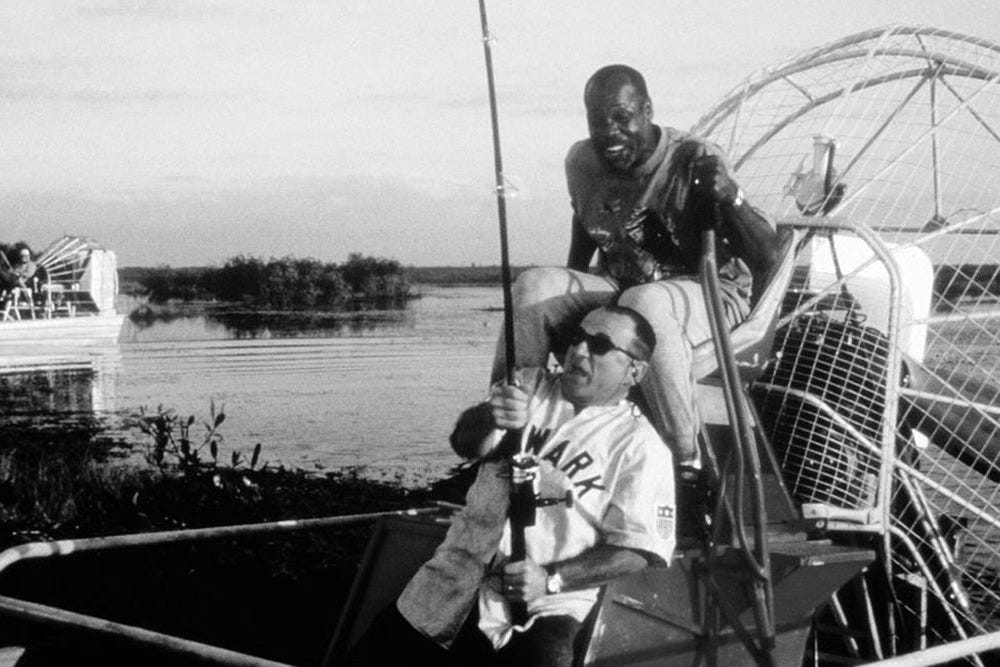
But you want to know what one of my favorite movies ever is?
Gone Fishin’.
Starring Joe Pesci and Danny Glover. Just two guys trying to win a fishing contest and get tangled up in crime.
Is it a five-star work rate comedy? Nope.
Is it culturally revered? Absolutely not.
Does it show up on a film school syllabi? I pray not. But honestly? It’d be kind of incredible if it did.
Do I love it anyhow? Yes.
Because sometimes fandom isn’t about the objective best.
It’s about what hits you at the right time in your life.
What you watched on a random Saturday night when nothing else felt urgent.
What you bonded with your grandparents over when they bought you a pay-per-view for your 12th birthday.
What you argued about on a message board in between homework assignments.
What imprinted on you before you knew what work rate even meant.
Wrestling discourse can make you feel like you need to revere every sacred text. Like you need to have seen every five-star match. Like your joy has to be defensible in a debate.
It doesn’t.
Appreciate the great. Study the classics. Respect Misawa. Understand Kobashi. Know the lineage. But don’t feel pressured to pretend something moved you when it didn’t.
Your fandom — whether it’s wrestling, cinema, or comic books — isn’t a term paper.
It’s the match you watched on a grainy TV in a house you don’t have a key to anymore.
It’s the storyline you didn’t fully understand but felt in your chest anyway.
It’s the night you stayed up too late and paid for it the next morning — and didn’t regret it.
It’s the random pay-per-view you watched alone but somehow still remember like you weren’t.
It’s not about how loud it was. It’s about how long it lasted.
If that’s a Brad Armstrong match from 1993 instead of an All-Japan epic, that’s fine.
If you’re still waiting on Tiger Division like a rain delay in April, that’s fine too.
Because fandom isn’t ultimately about canon.
It’s about connection.
It’s about what you carry with you.
Whatever your Gone Fishin’ is.
Whatever your Ventura arm-wrestling challenge is.
Whatever your 1 a.m. lucha match is.
That’s your fandom.
And around here, that’s enough.